
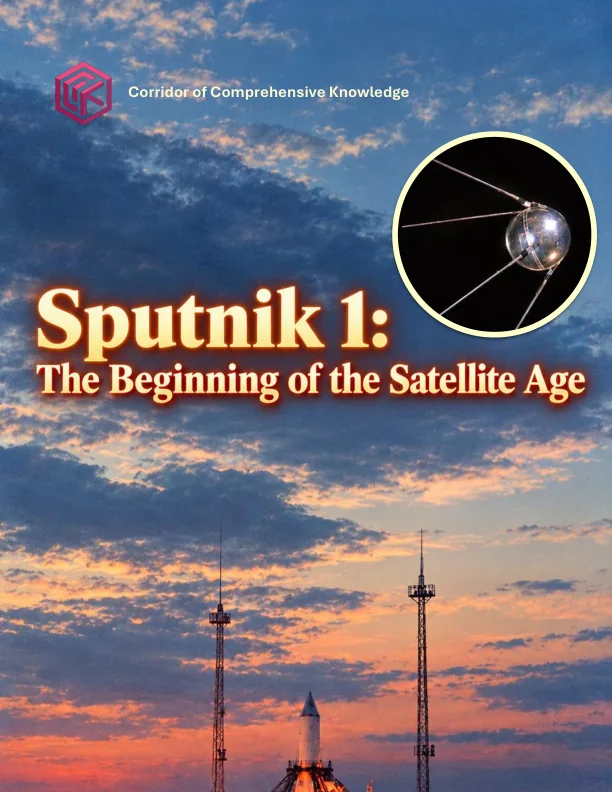
Article overview
This article uses the launch of Sputnik 1 as a starting point for understanding the beginning of the satellite age. The historical context leads to questions about how a satellite stays in orbit, how its motion relates to gravity and Earth’s rotation, and how its signals could be observed from the ground.
Connections to radio communication and the Doppler effect show how mathematics and physics help explain an event of major scientific and technological significance. The article links early space history with the school concepts needed to investigate satellite motion and communication.